
← Back to Resources
What is domestic flex, and how does it help balance the grid?
October 12, 2026
An electric car plugged in at 6 pm doesn’t need to start charging at 6 pm. It needs to be ready by 7 am. Somewhere in those thirteen hours is a window when electricity is cheaper and easier for the grid to supply. Charging in that window instead of straight away is domestic flex in its simplest form.
Domestic flex is the ability to shift or adjust when household devices draw power from the grid, or return it, in response to a signal, without changing what the household actually gets. The heat pump still keeps the house warm. The car is still charged by morning. What flexes is the timing and rate of the electricity used to get there.
That timing matters more every year. As homes switch to electric heating and transport, the hours when everyone needs power at once are getting harder for the grid to cover.
Electrification is putting more pressure on the evening peak
Wind and solar produce power when the weather allows, not when households want it. On grids with lots of solar, demand on the grid drops in the middle of the day, when solar covers much of it, then rises sharply in the early evening as the sun sets and people get home, cook and turn the heating up. Grid operators call this daily shape the duck curve, and the steep evening climb is the hardest part to manage.
Electrification adds to that evening climb. Picture a typical home's electricity use over a day: low overnight, rising in the morning and peaking in the early evening. Add rooftop solar, and the middle of the day dips, because the home is covering more of its own demand. Add a heat pump, or air conditioning in hotter climates, and new spikes appear in the morning and evening, when heating and cooling work hardest. Add an EV plugged in after work, and the evening peak shoots up again, just as solar output disappears.

Each of these devices is good news for emissions. But left unmanaged, together they make the evening peak taller and steeper, and the grid has to be built for a peak that only lasts a few hours a day.
Flex moves demand out of the peak instead of building for it
Historically, grids met the evening peak by building more generation and more network capacity, much of it idle for most of the year. Domestic flex is the alternative. Instead of building for the peak, you move some demand out of it: charge the car overnight, pre-heat the house in the afternoon, store midday solar in a battery for the evening. That means less new infrastructure to pay for, lower bills for households, and more of the day's demand met by wind and solar.
Where home batteries and rooftop solar are already common, this is starting to show: batteries soak up midday solar, release it in the evening, and the peak flattens. But many devices that could flex still aren't connected to any programme.
Four device categories hold almost all the flex in a home
A phone charger has no flex worth aggregating. Only household devices with a high energy draw, like a heat pump, or significant storage, like a home battery, have enough impact to matter at grid level. Four categories of common household devices fit that description.
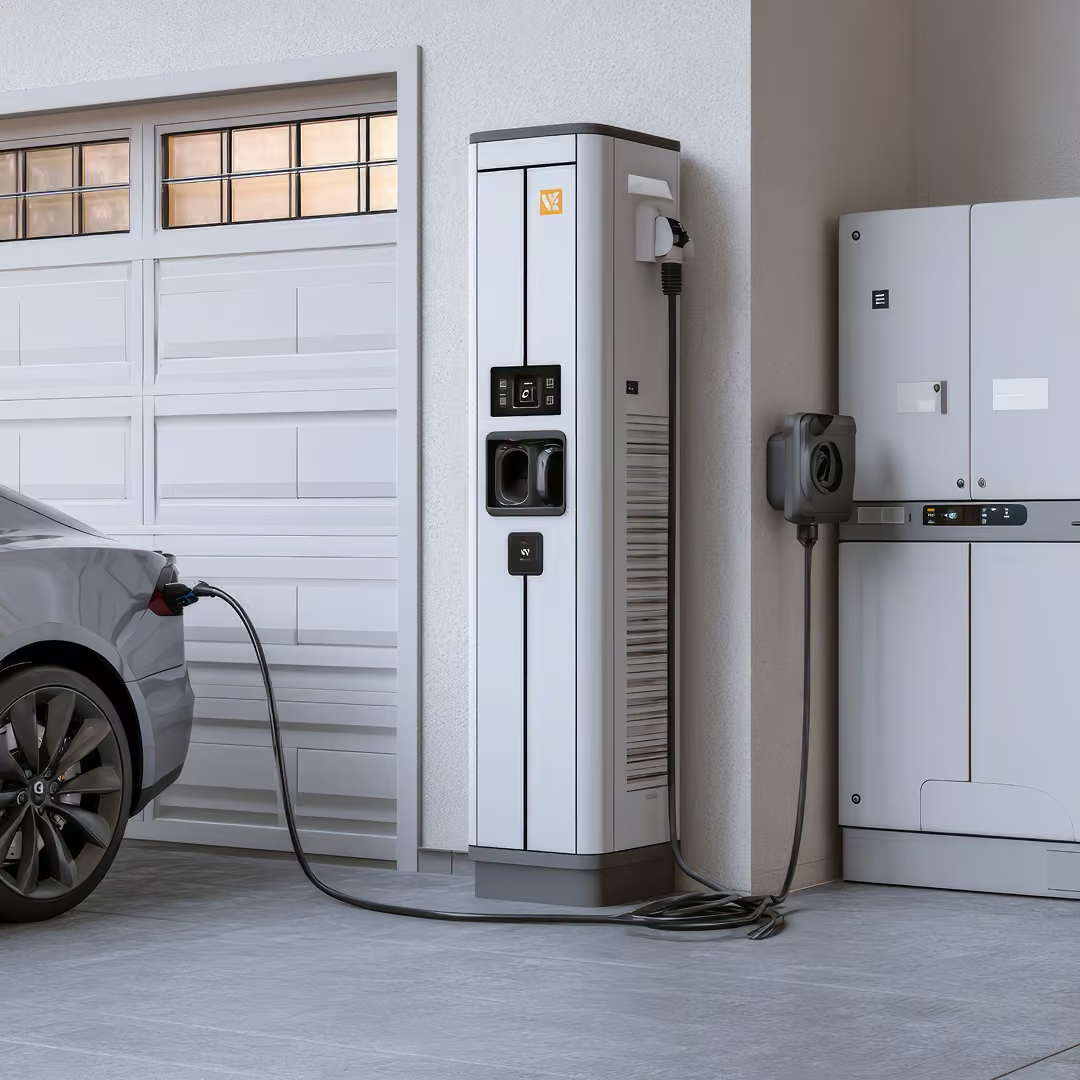
EV chargers draw anything from around 2kW on an ordinary socket to 11kW or more on a dedicated home charger, depending on the country’s electricity supply (Which?, ADAC). And most cars sit plugged in far longer than they need to charge. Home batteries usually store 5-15kWh (Which?) and work in both directions, charging when power is plentiful and exporting when it’s scarce.
Heat pumps for a typical home deliver around 5-16kW of heat (The Eco Experts), and a well-insulated house holds onto that warmth, so they can pre-heat before a peak and ease off during it. Hot water cylinders are usually heated by a 3kW immersion element (Which?) and act as thermal stores: heat the water at 3 a.m., and it’s still hot for a 7 am shower.
These four devices represent a significant energy load in the homes that have them. Multiplied across a grid and used for domestic flex, they could have the same impact as a large power station. That’s where Mercury focuses its work.
In the home, good flex is mostly invisible
Picture a weekday evening. The house is already warm when everyone gets home, because the heat pump did most of its work in the afternoon. The battery, charged earlier in the day, covers cooking and the kettle through the peak. The hot water cylinder was topped up at lunchtime, when solar output was high. If demand spikes unexpectedly, the EV charger pauses for twenty minutes, and nobody notices.
The household doesn’t see any of this unless they check the app or their bill, and that’s the point. Flex that asks people to change their habits or put up with a cold house doesn’t last. Flex that works within the household’s own limits, like a warm living room and a car ready for the school run, can run every day of the year.
A device that can flex isn't always one the grid can rely on
Without smart devices, the main way to get households to flex is to ask them to use less. In September 2022, during a record heatwave, California sent an emergency text to 27 million phones asking people to cut their electricity use (US Energy Information Administration). Within five minutes, demand fell by more than 2,000MW. It worked, but no one could have said in advance how much demand would drop, which homes would respond, or whether it would happen again the next night. Some of that demand also came back later in the evening.
Smart devices can respond automatically to a signal from the grid, with no one in the household needing to read a message or switch anything off. That makes their response far more predictable, but only if energy providers can plan around it, pay for it and rely on it. For that, every device in the fleet needs to do three things: respond within a known time, report what it actually did, and handle issues safely if its connection drops. If one manufacturer’s battery responds in ten seconds and another’s takes five minutes, or one reports every 30 seconds and another every hour, a provider has to test each one separately before it can count on either.
Once devices meet those three requirements, domestic flex stops being a nice-to-have and becomes something grid operators can use at scale to keep supply and demand in balance. Today, response times and reporting still vary by manufacturer, by model and sometimes by firmware version. A shared standard for how devices behave solves that.
Defined behaviour turns household devices into capacity operators can count on
The Mercury Mark certifies how a smart-energy device behaves on the grid: how fast it responds, what it reports, and how it handles issues such as a dropped connection. Devices are certified to one of three performance classes, with response times ranging from one second for the fastest frequency services to 120 seconds for distribution-level flexibility.
A Mercury-certified device behaves the same way with any Mercury-aligned utility or platform, whoever made it. For utilities and aggregators, that means pointing to a class instead of testing every device themselves. For manufacturers, it means certifying once rather than integrating again for every new partner. For households, it’s simple: See the Mercury Mark. Know it just works.
Where to go next
If you're working out how domestic flex fits your devices, your programme or your policy work, we're happy to talk it through. Get in touch.

